
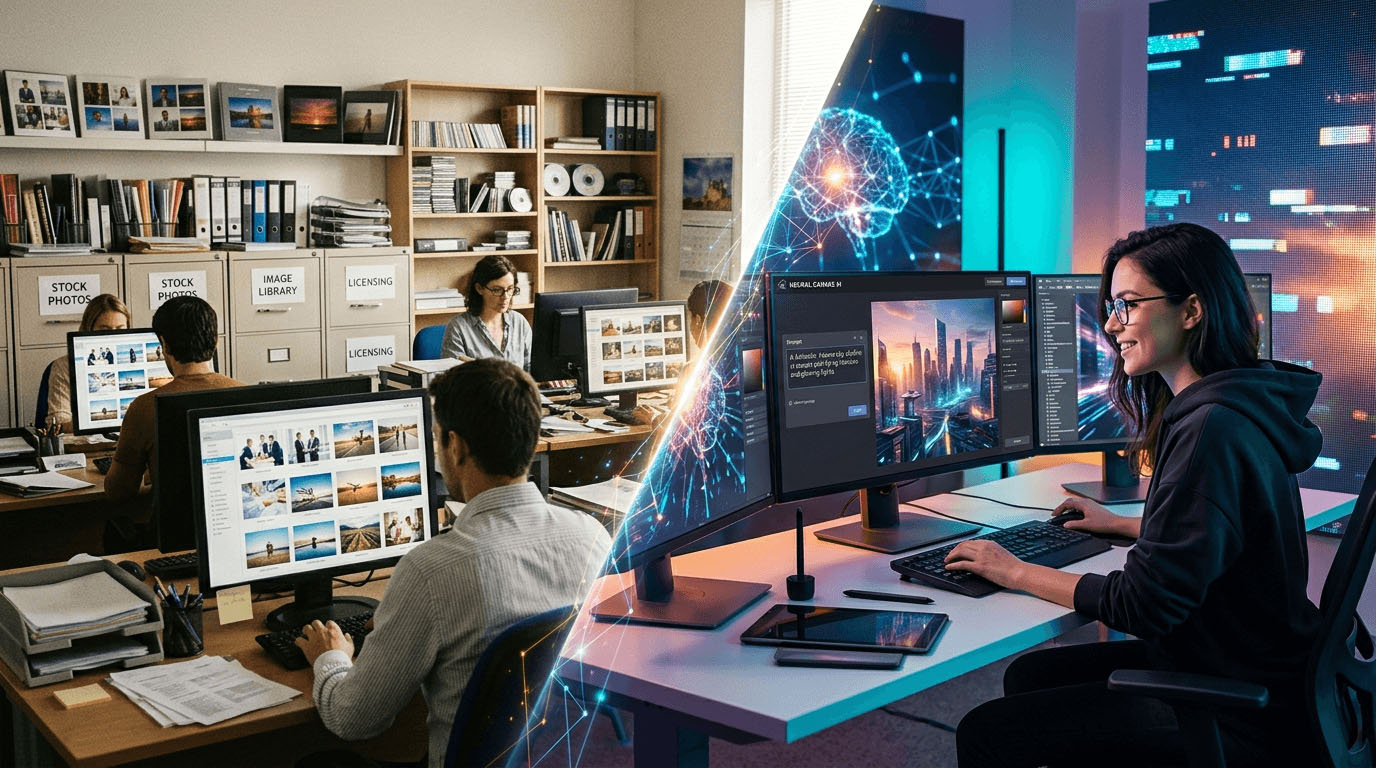
Stock photography has served content creators well for decades. But it has always come with a cost, a friction, a compromise. You browse hundreds of images to find one that almost fits. You pay for a subscription riddled with usage restrictions. You spot your “unique” hero image on three other blogs in your niche. Something is changing, and it is changing fast.
The Shift Is Real: AI-generated images are moving from novelty to practical tools for bloggers and content creators who need original, cost-effective visuals without the licensing headaches of stock photography.
– Copyright and ownership rules for AI images are more workable than most creators assume, especially for commercial publishing.
– File optimization matters just as much with AI images as with stock photos, keeping page speed intact.
– Understanding platform terms and copyright law is the essential step before publishing AI visuals on monetized content.
The Problem With Stock Photography Nobody Talks About
The convenience of stock photos is undeniable. A few clicks and you have a polished image ready to upload. But the long-term costs are harder to see. Subscription services add up month over month. Licensing terms are complicated and vary wildly between service tiers. Attribution requirements on free platforms can feel awkward in editorial contexts. And the aesthetic homogeneity is real. If you have ever used a stock photo of someone sitting at a laptop in a coffee shop, so has roughly half the internet.
Beyond cost and aesthetics, there is a deeper issue: you rarely own what you use. Stock photos come with licenses, not ownership. You are renting the right to display an image under specific conditions. Step outside those terms, even accidentally, and you face a licensing dispute. For bloggers monetizing through ads, affiliate links, or sponsored content, that exposure is not trivial. One misapplied image on a commercial page can trigger a takedown notice or a settlement demand.
What AI Image Generation Actually Offers
AI image generators have improved dramatically over the last two years. Tools that once produced blurry faces and distorted hands now create photorealistic scenes, original illustrations, and branded visual styles that feel intentional rather than generic. For a blogger, this changes the calculus entirely.
You describe what you need. The tool builds it. The result is unique to your prompt and your session. No other blog is going to have that exact image because no other blog asked for precisely that combination of subject, style, lighting, and color. That is a meaningful creative advantage, and it is now accessible without a design background or a large budget.
The workflow is also faster for many creators. Instead of spending twenty minutes hunting for an acceptable stock option, you spend two minutes refining a prompt. The time savings compound across a content calendar that runs four or five posts a week.
The Ownership Question That Actually Matters
The biggest reason creators hesitate to use AI-generated images commercially is the copyright question. Who owns an image created by a machine? If a tool generated it, can you actually use it in a post that earns money?
These are fair concerns and they deserve a serious answer rather than a dismissal. The short version is that the answer depends on the platform and the jurisdiction, but commercial use is often explicitly permitted for images you generate. Some platforms assign all rights to the user. Others retain a broad license of their own while still permitting commercial use. A few are deliberately vague, which is a red flag worth noticing.
The U.S. Copyright Office has clarified its position in stages, making clear that purely machine-generated content without meaningful human creative input generally does not qualify for traditional copyright protection. That sounds alarming at first. In practice, for content creators, it can mean reduced risk: if no one holds copyright on an image, no one can sue you for using it. The nuances matter, though, and the official guidance on AI authorship rules covers the registration and ownership landscape in detail for those who want to go deeper on the legal side.
For a practical breakdown of what this means in everyday publishing, a creator-friendly guide to AI copyright addresses the ownership question in plain language. It is worth reading before you publish your first AI-generated image on a monetized post.
Why Licensing Exposure Is Lower Than You Think
Most creators overestimate their legal exposure with AI images and underestimate it with stock photos. With stock photography, the risk is using an image outside its license terms, which is surprisingly easy to do. An image licensed for editorial use gets dropped into a sponsored post. An image from a free tier ends up inside a paid digital product. These mistakes happen constantly, and the rights holders have systems in place to catch them.
With AI images, the risk profile is different. The platform’s terms of service govern commercial use, and many platforms have made this language explicit and permissive. The absence of traditional copyright on purely machine-generated output also reduces the pool of potential claimants. You are not dealing with an assignment of rights from a photographer or an image agency. You are working within a platform’s usage policy, which you can read and verify.
That said, not all platforms are equal. Some have changed their policies after public backlash. Others have quietly restricted commercial rights for free-tier users without much fanfare. Reading the terms once before committing to a tool, and then checking back when the platform announces updates, is a non-negotiable habit for any creator using AI visuals commercially.
File Size Is Still Your Responsibility
Here is something that does not change whether you use stock photos or AI-generated images: file size still matters. Large image files slow page load times. Slow pages hurt bounce rates, user experience, and search rankings. This is a basic web performance issue that no image source solves for you automatically.
AI-generated images often come out of generators at high resolution, which is great for quality but not ideal for upload-ready files. Running them through a tool to compress JPG files before uploading is the same step you should be taking with stock photos. It takes seconds and can cut file sizes by fifty percent or more without visible quality loss.
Page speed is a confirmed ranking factor. A beautifully generated, legally clear image that tanks your Core Web Vitals score is not a net gain. Build file optimization into your publishing workflow as a standard step rather than an afterthought, and apply it consistently regardless of where your images come from.
How Bloggers Are Integrating AI Images Right Now
The pattern emerging among content creators who have made the switch is practical rather than ideological. They are not abandoning stock photography entirely. They are using AI-generated images for hero images, section breaks, and illustrative visuals where originality matters most. They continue to rely on stock photography for specific content types where photographic authenticity is hard to replicate, such as lifestyle images featuring real people in real settings.
The hybrid approach reduces subscription dependency while solving the homogeneity problem at the top of the page, where first impressions are formed. Over time, as AI image quality continues to improve and platform policies mature, more of the visual workflow is shifting toward generation rather than search.
The financial case is also becoming clearer. A mid-tier stock subscription can cost well over a hundred dollars a month. Many AI image generators offer commercial-friendly plans at a fraction of that, and some provide generous free tiers that cover a typical blogger’s volume with room to spare. For a creator producing several posts a week, the savings are material by the end of the year.
The Credibility Gap Is Closing
A year ago, saying an image was produced by an AI tool carried a certain stigma in publishing. Readers noticed distorted hands. Backgrounds looked surreal. The uncanny valley was unavoidable in any image featuring people.
That gap is closing. Current-generation tools produce images that hold up under scrutiny. Readers do not always know, or particularly care, whether a hero image was photographed or generated, as long as it is relevant and high quality. The editorial question is the same it has always been: does this image serve the content and the reader?
The answer, increasingly, is yes.
When “Legitimate Alternative” Becomes Your Default
The hesitation most creators feel about AI-generated images is understandable but increasingly outdated. The quality argument has weakened. The cost argument has flipped. The licensing argument was always more nuanced than the fear suggested.
What remains is due diligence. Read the terms of the platform you use. Understand what the copyright landscape means for images generated on that platform. Optimize your files before uploading. And if you are publishing on a site that earns revenue, treat the ownership question seriously rather than hoping it does not come up.
The practical reality is that bloggers and content creators who adopt AI-generated images thoughtfully are gaining a real edge: original visuals, lower costs, and a workflow that scales. The creators still waiting for perfect legal clarity before they act may be waiting longer than the opportunity allows.