
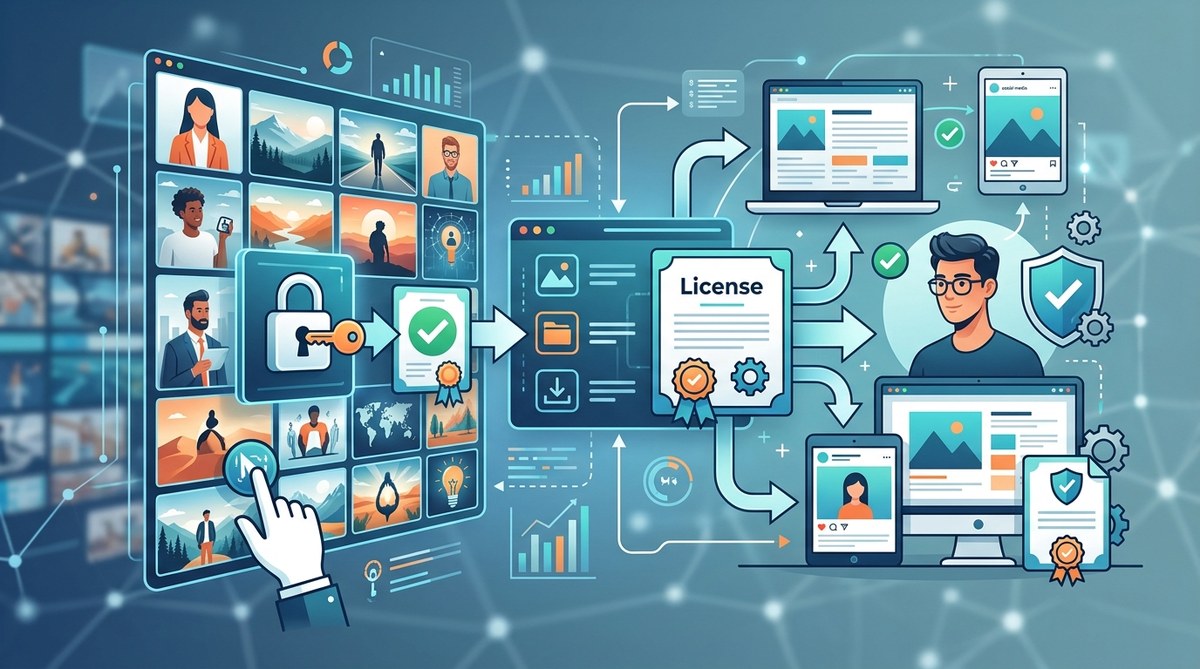
Stock images fuel countless projects from blog banners to billboard campaigns, but beneath every striking thumbnail hides a web of licensing terms that can trip you up. At GettyCritics.com we critique stock photography with a critical eye for composition, but we also dig into the licensing and legalities that shape how images can be used. If you are a photographer selling stock, a business buyer, or a designer who relies on stock imagery, understanding licensing is not a luxury it is a requirement. Get ready to break down the jargon, compare licensing models, and learn practical steps to protect yourself and your work.
Understanding the licensing landscape
Licensing is the contract that governs how an image can be used after you purchase or obtain it. It is not the same as ownership; when you license an image you gain specific rights, and those rights come with limits. The core idea is simple: licenses spell out who may use the image, for what purpose, for how long, in which places, and on which media. The complexity arises because licenses can vary widely depending on the source, the intended use, and the rights negotiated between the photographer or agency and the licensee.
Here is what licensing typically covers in practice:
– The scope of use: commercial, editorial, advertising, social media, websites, print, etc.
– The duration: perpetual, time-bound, or tied to a specific campaign.
– The geography: local, national, or global usage rights.
– The media format: print, digital, broadcast, merchandise, and more.
– Whether the license is exclusive or nonexclusive.
– Whether sub-licensing to clients or partners is allowed.
A well crafted license reduces the risk of infringement and protects both the creator and the user. It also clarifies what constitutes a breach and what remedies are available if terms are violated.
Common licensing models
Licensing imagery falls into several broad models, each with its own typical use cases, cost structures, and potential pitfalls. Understanding these models helps you choose the right image for the right moment and avoids common overuse issues.
Royalty Free RF
Royalty free licenses do not mean zero payment or unlimited rights. Rather, they allow broad reuse after an upfront fee, often with little ongoing royalty every time the image is used. RF licenses usually permit multiple uses across various projects without additional fees, but they come with constraints:
– No exclusive rights: the same image can be licensed to multiple buyers.
– Typical prohibitions on specific uses like resale of the raw image without modification, or use in trademarked logos in some cases.
– Some RF licenses limit usage to a certain number of impressions, audiences, or geographies unless higher tier licenses are purchased.
RF is popular for its simplicity and cost efficiency. However, the freedom to reuse can create conflicts if the image is later needed in a sensitive context or for a major campaign that demands exclusivity.
Rights Managed RM
Rights managed licenses are highly targeted and negotiated for each project. The license specifies exact use cases, durations, geographic scope, and media. RM is favored when a buyer needs precision and control:
– Usage is restricted to the defined purpose such as a specific campaign, market, or time period.
– Renewal or extension often requires new negotiations and can incur additional fees.
– RM licenses can be exclusive or nonexclusive depending on the agreement.
The benefit of RM is predictability and lower risk of overuse. The downside is potential complexity and higher upfront costs for more strategic campaigns.
Creative Commons CC and CC0
Creative Commons licenses provide a framework for sharing imagery with various permission levels. CC licenses often require attribution and impose certain restrictions. CC0 is a waiver that places the image in the public domain, allowing nearly unrestricted use. Key notes:
– CC licenses may require attribution to the photographer.
– CC0 removes most restrictions but may still have considerations for moral rights and model or property releases.
– Not all stock platforms offer CC0 or CC licenses for all images; verify the source.
CC can be a flexible option for certain educational, informational, or experimental projects, but it is essential to understand the exact terms attached to each image.
Public Domain and Editorial Use
Images in the public domain have no copyright restrictions, making them broadly usable. Public domain status can come from expiration, relinquishment, or images created by government entities in some jurisdictions. Editorial use restricts usage to non promotional contexts such as news reporting and educational materials. Misusing an editorial image in a commercial advertisement can lead to legal issues, even if the image itself is freely available.
How licenses are structured
Licenses are not one size fits all. The way a license is structured determines how you can deploy an image across campaigns and channels.
Duration and territory
- Duration can be perpetual or time limited. Some campaigns require licenses only for a single quarter or year.
- Territory defines where the image can be used. A license may be global, national, or regional. If you plan to run a campaign in multiple countries, verify the territorial scope in the license.
Media and format
- Some licenses cover only print and online usage, while others extend to broadcast, social media, packaging, and merchandise.
- Multi format licenses may come with higher fees but reduce the risk of needing additional approvals later in a project.
Exclusivity and sub licensing
- Exclusive licenses grant rights that exclude others from using the image for the defined purpose.
- Nonexclusive licenses allow the image to be used by others as well.
- Sub-licensing terms determine whether a buyer can grant usage rights to clients, agencies, or subcontractors.
Modifications and attribution
- Some licenses permit edits such as cropping or color adjustments; others restrict transformations.
- Attribution requirements vary; some licenses require credit lines, while others do not.
Special restrictions
- No use in defamatory or illegal contexts.
- No use in a way that could suggest endorsement unless explicitly allowed.
- No use in sensitive contexts such as political campaigns or medical claims without permission.
Getting into the details: model and property releases
A critical part of licensing is understanding when model and property releases are needed. These releases protect both the photographer and the user of the image.
Model releases
- Required when recognizability of a person is essential to the image and the image will be used in a context where the identity matters.
- Often needed for commercial advertising, product endorsements, or marketing that could imply a relationship with the person.
- May be waived for editorial use of non recognizably identifiable individuals in newsworthy or documentary contexts.
Property releases
- Needed when the photograph features private property or trademarks that could be misused or imply endorsement.
- Examples include a recognizable storefront, artwork, or a patented product visible in the shot.
- For architectural photography, a property release may not always be required unless the building’s distinct design is a focal point or part of a campaign.
Privacy and personality rights
- Some jurisdictions recognize privacy rights that protect how an image is used in public or semi public spaces.
- Even with releases, ensure the context aligns with the released terms to avoid misrepresentation or harm.
From license to usage: practical guidelines
Understanding terms is one thing; applying them correctly is another. Here are practical rules of thumb for both buyers and sellers.
What you can do with a license
- Use the image within the defined scope (purpose, duration, territory, and media).
- Apply reasonable edits consistent with the license terms.
- Reuse the image across multiple projects that fall under the same license allowances.
What you cannot do
- Exceed the defined usage or geography without obtaining an updated license.
- Use the image in a way that creates a false impression of endorsement.
- Sub-license, resell, or distribute the unmodified image file unless the license explicitly allows it.
- Remove watermarks or attribution when required by the license.
Verifying license terms
- Read the license agreement carefully before purchase.
- Check for exceptions or addenda that modify the standard terms.
- Confirm whether the license covers the final deliverables and all variants of the form you plan to use.
Documenting usage
- Keep a record of the license, the date of purchase, and the scope of rights.
- Save copies of agreements and proofs of payment.
- Maintain a usage log that aligns with media, duration, and distribution channels.
Stock image licensing for different users
Licensing decisions differ depending on whether you are a photographer licensing your own work, a business buyer, or a client.
For photographers licensing their own images
- Decide on a licensing strategy early: exclusive, nonexclusive, RF, RM, or CC.
- Consider offering a mix of licenses to maximize reach while protecting core work.
- Use clear, standardized language in licensing agreements and model releases.
- Be explicit about what users can and cannot do with your images.
For businesses buying licenses
- Map out campaign goals to determine which licensing model best fits your needs.
- When in doubt, choose RM or a higher level RF license to avoid future reconciliations.
- Ensure that you have the rights to use the image across all planned media and geographies.
- Watch for exclusivity needs; if a campaign requires uniqueness, plan for an exclusive license or commission custom photography.
For agencies and clients
- Clearly define the scope of work with the photographer and client in a licensing addendum.
- Consider a master image license that covers multiple campaigns to simplify renewals.
- Be mindful of the end use, especially for logos, trademarks, or sensitive topics where additional releases may be necessary.
Red flags and common pitfalls
While stock licensing is well established, there are pitfalls that can derail a project if not anticipated.
Misuse of metadata
- Some images rely on metadata to communicate license terms; ensure metadata is accurate and complete.
- Do not rely solely on metadata for licensing rights; verify the contract terms.
Subscriptions and license stacking
- Subscriptions can be convenient but may trigger overuse if not tracked.
- Combining multiple licenses for the same image can cause conflicts; ensure you are not paying for duplicate rights.
Editorial vs commercial confusion
- Misclassifying an image as editorial when it is used for marketing can violate licensing terms.
- Always confirm the permitted uses and consult the license if you plan to expand beyond editorial boundaries.
Using images in logos or merchandise
- Many licenses explicitly restrict logo use or merchandise unless an expanded license is obtained.
- Check whether a higher license tier is needed for branding materials.
Best practices and checklists
A structured approach helps keep licensing headaches away. Use these checklists as a quick reference before finalizing any stock image purchase or project.
Pre purchase checklist for buyers
1) Identify the campaign goals and expected usage.
2) Determine the geographic scope and duration of use.
3) Decide whether you need exclusive or nonexclusive rights.
4) Verify if the image requires a model or property release.
5) Read the license terms carefully for any prohibitions about logos or merchandise.
6) Confirm whether you can edit the image and to what extent.
Contract ready licensing language for photographers
- Include a clear description of the rights granted.
- Specify duration, territory, and media coverage.
- State whether the license is exclusive or nonexclusive.
- Note any required releases and ensure they are attached or referenced.
- Outline any restrictions on resale, sublicensing, or modification.
The role of model releases and rights management
Model and property releases are not optional add ons; they are central to licensing legitimacy.
- Always obtain model releases for recognizable individuals when the usage is commercial.
- Secure property releases for private locations or trademarked items that appear in images intended for broad distribution.
- Keep releases organized and easily accessible in case issues arise later.
- If a release is missing, consider reframing the shot or restricting the use to editorial contexts where releases may be waived.
Case studies and scenarios
- Scenario 1: A fashion retailer wants to use a stock image of a model wearing a branded jacket in a nationwide print campaign. The RM license must cover commercial use, the geographic scope, and possibly exclusive rights to ensure there is no conflict with other campaigns using the same image.
- Scenario 2: A technology blog uses a CC0 image for a post about software development. Attribution is not required, and there is no fear of trademark issues, but ensure the post does not imply endorsement by the person pictured if the release only covers the image in a general informational context.
- Scenario 3: A travel agency plans to feature a city skyline with a well known building in a billboard. If the building’s design or location is a protected trademark, a property release or permissions may be necessary, and the license should cover outdoor advertising at scale.
Why licensing matters for GettyCritics.com readers
GettyCritics.com surveys stock photography on composition and technical quality, but licensing and legal clarity are equally essential to responsible usage. A well chosen image and a precise license protect you from costly lawsuits, bad publicity, and campaign disruption. The licensing decisions you make today affect how your visuals can grow with your brand for years to come.
Frequently asked questions
Do all stock images require model releases
Not all images require releases. Editorial uses or images with non identifiable subjects may not require releases, but it is safer to assume that commercial projects will need them.
Can I obtain a license after the image is published
Yes, you can often license images after publication, but the scope might not cover existing uses. If you plan to reuse the image across more media, an updated license may be necessary.
How strict are stock licenses about logos and branding
Licenses often restrict the use of logos or branding that could imply endorsement. Check the license for specific terms and request an expanded license if needed.
What happens if I violate a license
Licensing violations can lead to cease and desist letters, statutory penalties, and potential lawsuits. Always align your use with the license terms to minimize risk.
Final thoughts
Navigating stock image licensing is a mix of legal precision and creative strategy. By understanding the core licensing models, knowing when releases are needed, and applying practical guidelines for usage, you can maximize the value of stock imagery while staying on the right side of the law. GettyCritics.com is your partner in this journey, offering critique not only on visual composition but on how licensing shapes the stories those images tell.
If you want more insights, subscribe to GettyCritics.com for ongoing analysis of stock photography practices, licensing trends, and real world examples of what works and what to avoid. Remember, the best image is not only about a flawless shot but also about a license that fits your project like a glove.